
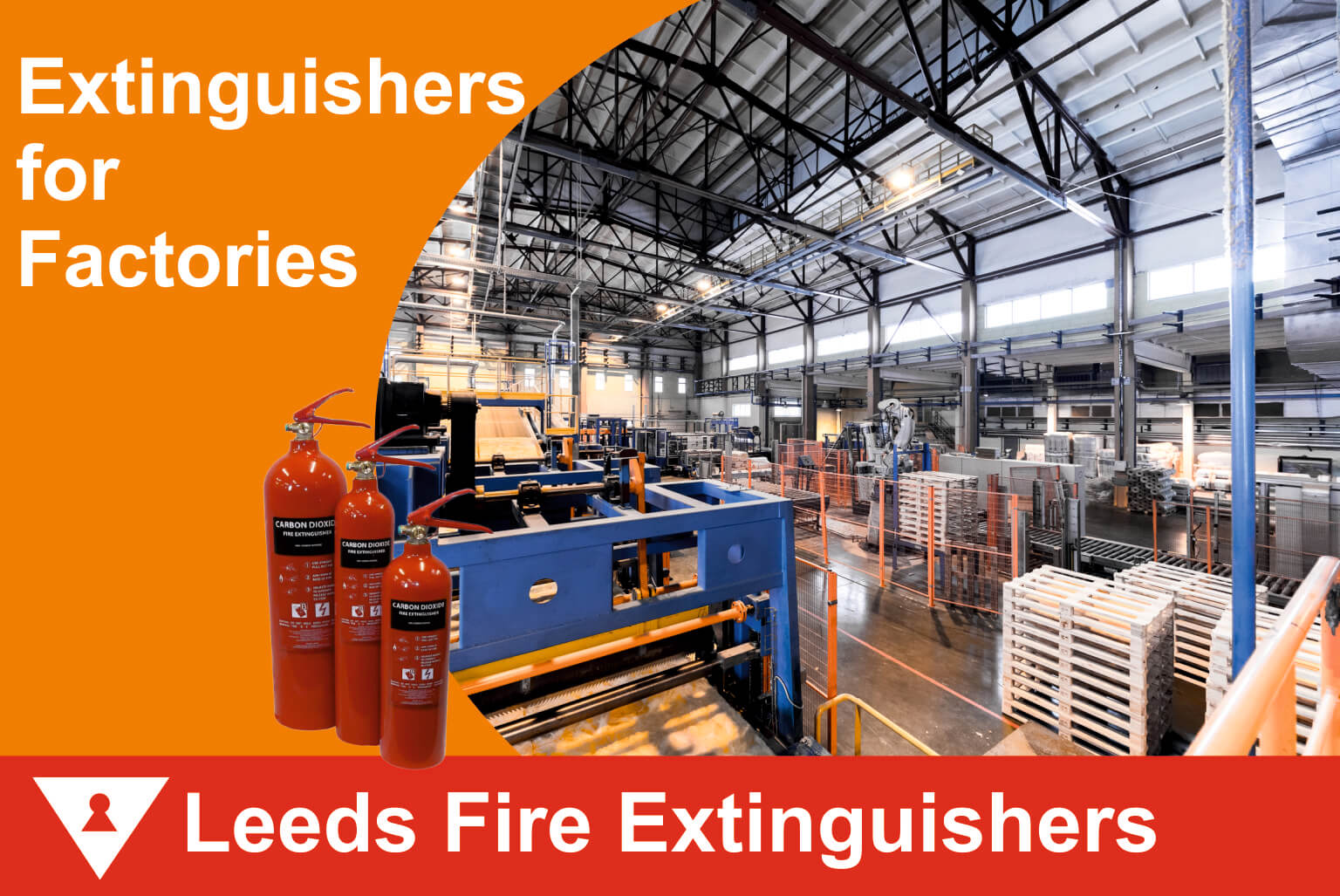
Factory Fire Extinguishers –
Manufacturing businesses invest significant time and resources into machine safety, preventative maintenance and operational efficiency. However, one area that can sometimes receive less attention during machinery upgrades is the suitability and location of fire extinguishers. Across Leeds, manufacturers are introducing new production equipment, robotics and automated machinery at an increasing rate, making it essential that fire protection evolves alongside these operational changes.
Every new machine introduced into a factory has the potential to alter the fire risk within that area. Electrical control panels, motors, hydraulic systems, lubricants, compressed air equipment and production waste can all contribute to different fire hazards. Whilst a machinery risk assessment may focus on guarding, emergency stops and operator safety, it should also consider whether suitable firefighting equipment remains readily available.
One of the most common mistakes is assuming the existing extinguisher layout remains appropriate after production equipment has been relocated. New machinery can block access to extinguishers, increase travel distances or create entirely new work areas that were never considered when the original fire safety equipment was installed.
Accessibility is fundamental during an emergency. Staff should never need to move towards a developing fire to retrieve an extinguisher. If new machinery has changed pedestrian routes or introduced barriers, extinguisher locations should be reviewed to ensure equipment remains immediately accessible from normal working positions.
Manufacturing environments often contain several different fire risks within the same production hall. General combustible materials such as cardboard packaging, timber pallets and plastic components require different firefighting methods from electrical equipment. Selecting the correct extinguisher type and positioning it appropriately is an important part of protecting both employees and expensive production assets.
Electrical machinery deserves particular attention. Control cabinets, CNC machines, conveyors and automated production equipment all contain electrical components that may require a carbon dioxide (CO₂) extinguisher nearby for trained personnel to use on suitable fires. Positioning these extinguishers close to electrical hazards whilst maintaining clear access routes helps improve emergency response without creating unnecessary obstructions.
Storage areas connected to production lines should also be reviewed whenever manufacturing processes change. Additional raw materials, finished goods or packaging supplies may alter the fire loading within the building, making it sensible to confirm that extinguisher provision still reflects the current layout rather than the previous one.
Many Leeds manufacturers regularly invest in lean manufacturing initiatives to improve productivity. As workstations are rearranged and production cells redesigned, fire safety equipment should form part of the planning process rather than being considered afterwards. Integrating extinguisher reviews into improvement projects often results in better positioning and fewer disruptions once production resumes.
Employee awareness is equally important. Even the most carefully positioned extinguishers provide limited value if staff are unfamiliar with their locations or appropriate use. Whenever machinery is relocated or production areas are reconfigured, employees should be informed of any changes to firefighting equipment and emergency procedures.
Routine servicing remains a key element of effective fire protection. Professional maintenance ensures extinguishers remain correctly pressurised, clearly identified and ready for use if required. During servicing visits, engineers can also identify changes to the production environment that may justify relocating or adding equipment.
Professional fire risk assessments provide another valuable opportunity to review extinguisher provision following machinery upgrades. Assessors consider how the building is currently being used, the nature of the fire hazards present and whether firefighting equipment remains suitable for the environment. This practical approach ensures fire protection keeps pace with operational development.
For many manufacturing businesses, downtime can be just as costly as equipment damage. Quickly controlling a very small fire before it develops further can significantly reduce disruption, helping protect production schedules as well as employees and property. Suitable extinguishers positioned in the right locations contribute towards that objective.
As manufacturing technology continues to evolve, fire safety should evolve alongside it. Reviewing extinguisher provision every time machinery layouts change is a simple but effective way of maintaining a safe workplace while protecting valuable investments in modern production equipment.
For manufacturers across Leeds, incorporating fire extinguisher reviews into every machinery risk assessment demonstrates a proactive approach to workplace safety. It ensures firefighting equipment remains practical, accessible and appropriate for the way the factory operates today, rather than the way it operated several years ago.


