
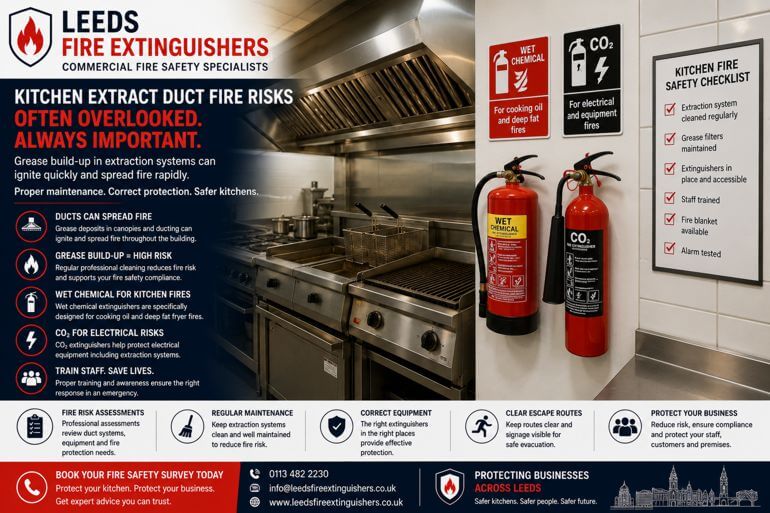
Kitchen Extract Duct Fire Risks –
Commercial kitchens across Leeds face a wide range of fire risks every day, but one area frequently underestimated is the fire hazard associated with kitchen extraction ductwork.
Many businesses correctly focus on:
- cooking appliances
- deep fat fryers
- gas isolation
- and portable extinguishers
yet extraction systems themselves can become a significant source of fire spread if not properly maintained and protected.
As commercial kitchens continue operating at higher intensity levels, fire extinguisher planning increasingly needs to consider the wider fire risks associated with extraction systems and grease accumulation.
Kitchen Extract Ducts Can Spread Fire Rapidly
Commercial extraction systems remove:
- heat
- smoke
- steam
- grease particles
- and cooking vapours
from busy kitchen environments.
Over time, grease deposits may build up within:
- extraction canopies
- filters
- ducting
- and fan systems.
If ignition occurs, fire may spread rapidly through the ductwork into other areas of the building.
Grease Build-Up Increases Fire Risk
Grease deposits are highly combustible and may ignite from:
- cooking flames
- overheating equipment
- flash fires
- or neglected maintenance.
Busy commercial kitchens such as:
- restaurants
- takeaways
- hotels
- pubs
- and catering facilities
often require regular professional duct cleaning to help reduce fire risk.
Wet Chemical Extinguishers Remain Essential
Commercial kitchens commonly require:
- wet chemical extinguishers
- fire blankets
- and additional extinguisher provision
specifically designed for cooking oil and deep fat fryer risks.
Wet chemical extinguishers help suppress:
- cooking oil fires
- deep fat fryer fires
- and high-temperature kitchen fire risks
commonly found within commercial catering environments.
CO2 Extinguishers Support Electrical Fire Risks
Commercial kitchens also commonly contain:
- electrical appliances
- extraction systems
- refrigeration equipment
- and control panels
where CO2 extinguishers may help provide suitable protection for electrical fire risks.
Extinguisher Positioning Must Remain Practical
Commercial extinguishers should remain:
- clearly visible
- easy to access
- properly signed
- and mounted at compliant UK heights
without obstructing:
- escape routes
- kitchen workflow
- or emergency exits.
Correct placement helps improve response speed during emergencies.
Kitchen Staff Training Is Critically Important
Even correctly installed extinguishers may prove ineffective without:
- proper staff training
- awareness of extinguisher types
- and understanding of evacuation procedures.
Businesses should ensure staff understand:
- when extinguishers may be used
- how to raise the alarm
- and when evacuation takes priority.
Fire Risk Assessments Should Consider Duct Systems
Professional fire risk assessments increasingly review:
- extraction duct cleaning records
- kitchen fire suppression arrangements
- extinguisher provision
- and maintenance procedures
throughout commercial catering environments.
Modern Commercial Kitchens Face Increasing Demands
Many kitchens now operate:
- for longer hours
- at higher output levels
- and with more complex cooking equipment
than ever before.
This increases the importance of:
- preventative maintenance
- suitable extinguisher provision
- and integrated fire safety planning.
Fire Safety Compliance Helps Protect Businesses
Poorly maintained kitchen extraction systems may increase:
- property damage
- business interruption
- insurance complications
- and risks to life safety.
Regular servicing and professional extinguisher planning help businesses maintain stronger compliance and safer working environments.
Smarter Kitchen Fire Protection Supports Business Continuity
For businesses in Leeds, professionally planned commercial fire extinguisher provision that considers kitchen extract duct fire risks helps provide:
- improved life safety
- stronger fire protection
- reduced operational risk
- and greater peace of mind
As commercial catering environments continue evolving, integrated kitchen fire safety planning is becoming increasingly important for modern businesses.
Frequently Asked Questions
Why are kitchen extract ducts a fire risk?
Grease deposits inside duct systems can ignite and allow fire to spread rapidly throughout the building.
What extinguisher is used for commercial kitchen fires?
Wet chemical extinguishers are commonly used for cooking oil and deep fat fryer fire risks.
Should kitchen extraction systems be cleaned regularly?
Yes. Regular professional cleaning helps reduce grease build-up and improve fire safety compliance.


